Annual Subscription Renewals That Arrive Without Warning
Most people forget annual subscriptions exist until the surprise charge lands on their statement.
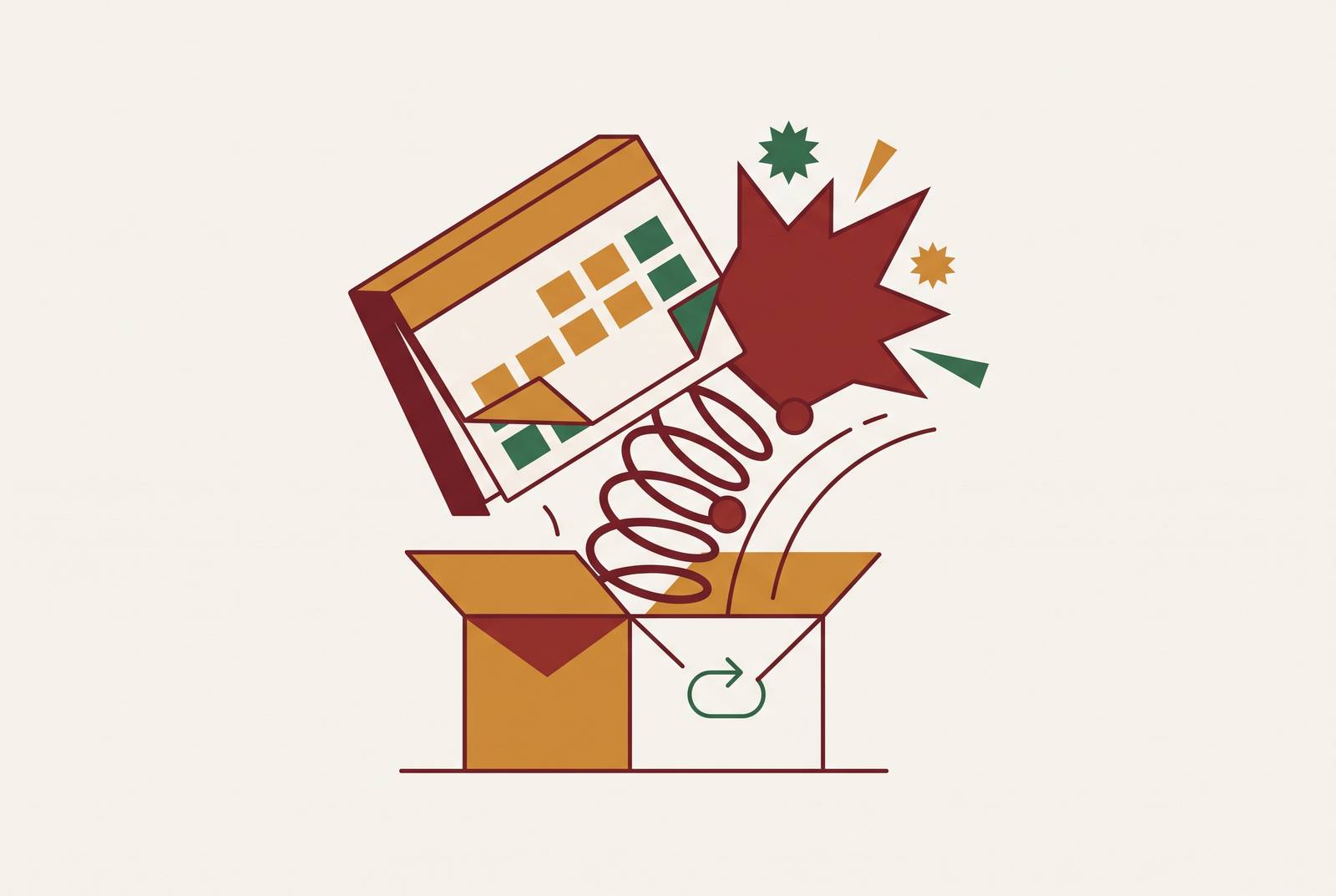
Annual subscription renewals are the charge nobody sees coming, and the reason is structural, not personal. Sign up once, pay once, and the whole thing goes dark for twelve months, which is more than enough time for the discount code, the free trial, or the one-off need that justified the purchase to vanish from memory entirely. Better willpower or a New Year's resolution to "audit your subscriptions" rarely holds up against that kind of gap. What tends to work instead is a system that watches the calendar so you don't have to, because manual tracking has a shelf life and that shelf life is short.
How badly consumers already misread their subscription spending
Ask someone what they spend on subscriptions each month and the number they give you is wrong, and not by a little. According to JustPricing, Americans spend an average of $219 a month on subscriptions but guess the figure at $86. That's a 2.5x gap between reality and estimate, and it's not one weird survey: an NBER working paper (No. 32625) found 90% of consumers underestimate their monthly subscription costs, with real spending running roughly three times higher than what they report.
Annual plans carry more of this blindness than monthly ones, and that's the part worth sitting with. A monthly charge shows up on a statement twelve times a year; an annual charge shows up once, then disappears for so long that most people stop expecting it at all. There's no recurring line item to jog the memory. The charge sits invisible until the day it lands, and by then it's already gone through.
The gap also gets worse exactly where usage is lowest. Self Financial's 2025 survey found ESPN+ (25.8%), Hulu (25.7%), and Paramount+ (24.8%) top the list of most commonly unused streaming subscriptions, and all three are among the most commonly unused streaming services. More subscriptions means less oversight, and annual billing is where that math breaks hardest.
What the annual renewal charge actually costs people
CNET's 2025 survey, run with YouGov, found Americans spent an average of $205 a year on subscriptions they never used, across the twelve months from April 2024 to April 2025. Spread evenly, that's about $17 a month. Annual subscribers experience it differently, though, and that difference is the actual problem.
For them it arrives as one charge, sometimes for hundreds of dollars, landing on a random day for a service they haven't opened since March. The forgotten subscription itself rarely does the damage. The renewal does — a charge on something the person would have cancelled without a second thought if anyone had told them it was coming.
Some of these plans carry exit costs nobody flagged at signup, either. Adobe's settlement, which included $75 million in cash refunds plus another $75 million in free services, centered on exactly this: early termination fees buried deep enough that users never knew they'd agreed to them. The cost of not paying attention doesn't spread evenly across the calendar. It lands all at once, and a bill you didn't see coming always stings worse than one you did.
How subscription companies design annual plans to reduce the chance you'll cancel
None of this happens by accident, and it's worth saying plainly: the friction is the product. Free trials that quietly convert into paid annual plans function as the funnel itself, not an accident within it. Instacart agreed to pay $60 million in consumer refunds after regulators found it hadn't properly disclosed that a free trial signup would auto-enroll users into a paid annual subscription.
JustAnswer ran the same play from a different angle. Consumers thought they were paying a one-time join fee of just a few dollars. What they'd actually signed up for were monthly plans running well into the double or triple digits, with the real terms sitting underneath an entry price too small to raise suspicion.
Low intro pricing that quietly steps up at renewal works on the same logic. The consumer anchors to the promotional rate, stops watching, and the renewal lands at a number nobody told them to expect. Then there's the exit itself, which is where the design gets most deliberate. The FTC's case against Amazon alleged the company enrolled customers without proper disclosure and built cancellation flows hard enough to navigate that people gave up before the next billing cycle hit. One survey found 66.9% of respondents wanted to cancel a subscription and didn't. Researchers who study this call it a dark pattern for a reason: cancellation friction is engineered, and its purpose is to turn forgetting into revenue.
What regulators have done about surprise renewals — and what they haven't fixed yet
The FTC finalized its Click-to-Cancel rule in 2024, which would have required cancellation to be exactly as easy as signup. A federal appeals court vacated it in July 2025. So as of now, that specific mandate isn't enforceable, even though the problem it targeted is still sitting right where it was.
Enforcement under existing law hasn't slowed down, though, and that distinction matters. The FTC's Amazon settlement carried a $1 billion civil penalty and $1.5 billion in consumer refunds. Chegg settled for $7.5 million. Both cases ran under ROSCA and Section 5, and both signal the agency isn't backing off just because one rule got struck down.
Congress has a bipartisan bill in play too. The Unsubscribe Act, introduced in January 2026, would require cancellation to match signup in simplicity and mandate advance notice before auto-renewal. It isn't law yet. States are moving faster than Washington here: Massachusetts, effective September 2025, requires five to thirty days' notice before renewal on any subscription term longer than 31 days. New York, effective November 2025, requires advance consent to price increases or a 14-day cancellation window with a pro-rated refund. The EU has run a 14-day cooling-off period on most online subscriptions for years under its Consumer Rights Directive, a baseline the US still doesn't match at the federal level.
The gap that actually matters is a timing gap. Every one of these protections steps in after the harm already happened. None of them stop the charge from hitting in the first place, and until something does, the burden stays on the consumer.
Rights consumers already have when a renewal charge arrives unexpectedly
A "no refunds" policy printed in the fine print doesn't automatically win, and people give up too quickly assuming it does. If the subscription was misrepresented, didn't deliver what was promised, or the renewal violated state consumer protection law, that policy can be challenged.
Some states have moved to require advance renewal notices and, in certain cases, cancellation windows with pro-rated refunds when renewals aren't properly disclosed. Separately, it is worth contacting your card issuer directly to understand what dispute options may be available when a charge arrives unexpectedly.
Documentation is what turns a dispute into a resolution instead of a dead end. Keep the cancellation confirmation email. Keep the screenshot of the original pricing terms. Without those, a legitimate claim gets rejected on a technicality, and technicalities are exactly what these policies are built on.
One more thing worth doing, and it costs nothing: just ask. Contacting the provider directly and requesting a lower rate or a prorated refund works more often than people expect, because companies would rather retain a subscriber at a discount than lose one outright. Seventy-three percent of consumers say they'd reconsider cancelling if offered a lower price. Companies know that number too, which is exactly why asking works.
A concrete system for catching annual renewals before they charge
The root problem is memory, plain and simple. Nobody's calendar holds a commitment made 300 days ago, so the fix has to live outside the person's head, in a system that doesn't forget on their behalf.
Start with an audit that actually goes back far enough to matter. Pull every subscription off bank and card statements going back a full 13 months, not 30 days, because an annual charge that hits once a year won't show up in a short window no matter how carefully you look.
For every annual subscription found, set a reminder 30 days ahead of the renewal date. That's enough runway to check actual usage, negotiate a lower rate, or cancel clean before the money moves. While at it, compare the current price against the rate at signup: Netflix's premium tier cost $11.99 a month in 2013 and $24.99 in 2025, according to Consumer Action, and increases like that rarely get announced with any real prominence. They just show up.
Free trials need their own line item, separate from everything else. Note the exact conversion date and the full annual total, not the monthly-equivalent number most companies display, since that figure exists specifically to make the price look smaller than it is. Go back to the original signup confirmation email too. The renewal date and full-year cost are almost always sitting in that receipt, usually below the fold where nobody scrolls. And if you're in Massachusetts or New York, businesses are now required to send advance renewal notices; treat a missing notice as a signal worth chasing down, not an oversight to shrug off.
Households now carry an average of 2.8 subscriptions, down from 4.1 in 2024, according to a June 2025 survey of 1,138 adults. The pullback is real. But a household doesn't need many annual renewals slipping through the cracks to lose several hundred dollars in a single year.
Why manual tracking eventually fails and what a persistent monitoring layer does differently
A one-time audit catches what exists today, and nothing else. It says nothing about the subscription added six months from now, or the price hike that happens quietly at the next renewal cycle. Annual billing demands permanent attention, and permanent attention is exactly what manual tracking cannot sustain over any real stretch of time. Most advice in this space tells you to build a habit, and habits around invisible, once-a-year charges rarely survive contact with real life.
Forty-one percent of consumers report subscription fatigue, and the effort of manual tracking is a big part of why people give up on monitoring altogether. Worth noting: 82% of consumers say they're more likely to keep a subscription when cancellation is easy, and the same logic runs in reverse for monitoring. Effortless oversight gets used. A chore gets abandoned, every time.
Automated monitoring changes the moment of delivery rather than the underlying math. A vague reminder to "go check something" gives way to a renewal surfaced before it charges, with the dollar amount attached and a specific action to take. Compass+ works this way: it connects to bank accounts, email, and subscription services in read-only mode, watching specifically for annual renewals approaching, free trials about to convert, and prices that have quietly crept up since signup. Each one surfaces with a number attached and a next step, not just a notification.
Read-only access matters here for a simple, mechanical reason: it means the tool can see what's coming without ever being able to move money itself, which keeps the saving it flags separate from any risk of sitting on the account. The value lands in removing the one job humans have already proven, again and again, that they can't reliably do by hand: remembering something that only happens once a year.