Subscription Costs That Quietly Increased Without Notice
Small hikes across streaming platforms add up to hundreds of dollars annually before anyone notices.
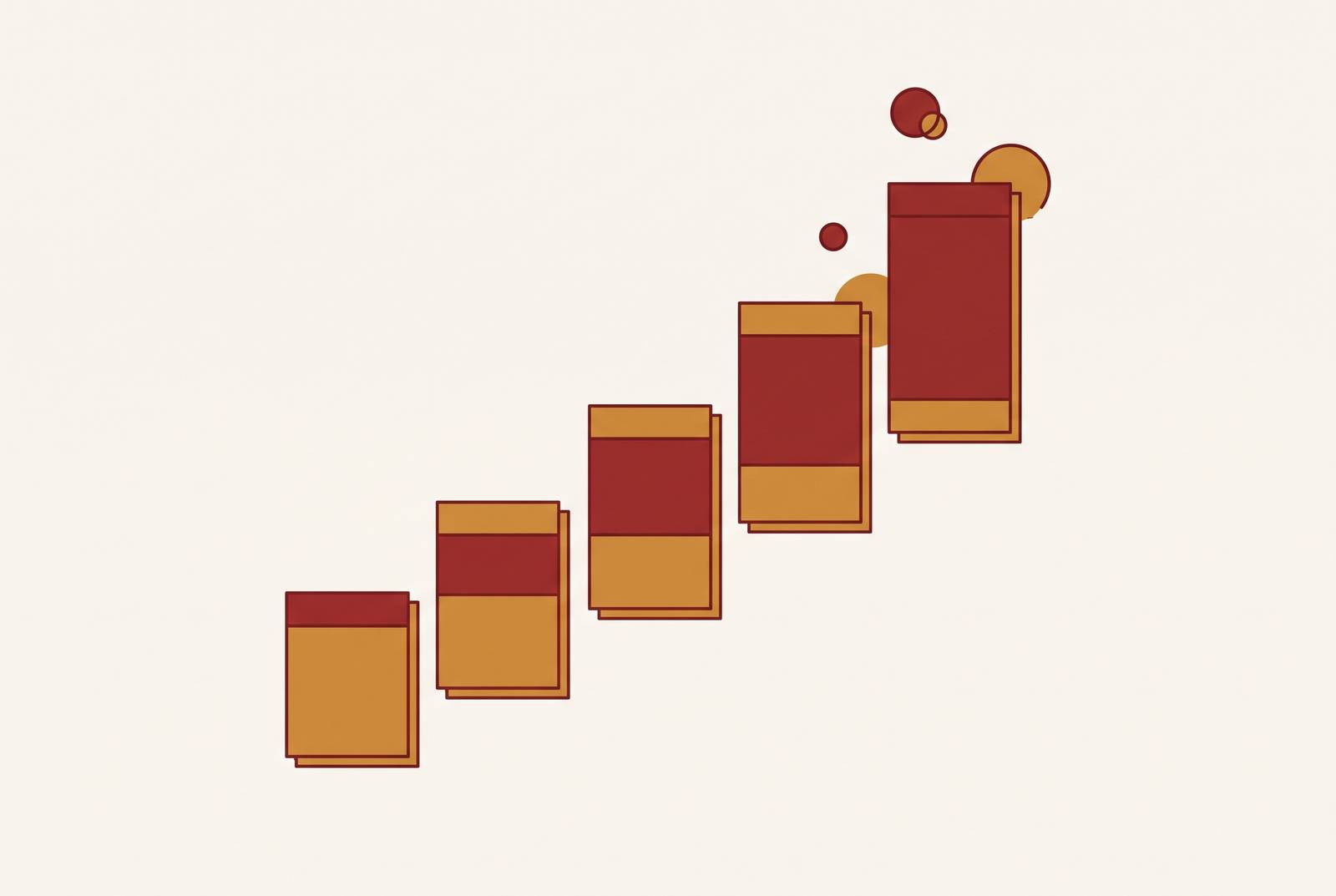
Late 2025 hit nearly every major streaming platform, and the pattern held across all of them: keep each hike small enough that complaining feels like more trouble than it's worth. Companies plan for this response deliberately.
Netflix raised its ad-supported plan by $1 and Premium by $2. Disney+ pushed its ad-supported tier up $2 and ad-free up $3 back in September. HBO Max followed in October with $1.50 on ad-free and $1 on ad-supported. Paramount+ tacked on a flat $1 a month across both Essential and Premium. None of these, alone, justifies a call to customer service, and every company involved knows it.
Run the math across a household juggling four to six of these platforms and you're looking at $15 to $30 a month in new spending nobody agreed to. Widen it to eight subscriptions and the drift runs $30 to $60 a month. Over a year, that's a car payment, bled out a dollar or two at a time.
The aftermath proves the mechanism worked exactly as designed. December 2024 and February 2025 saw significant drops in streaming subscriptions: over 20% in December, 18% in February. People weren't canceling when the hikes hit; they were canceling months later, once the higher number finally cut through, which means the companies already banked those extra months of revenue before anyone pushed back. Recognition lag functions as a core part of the business model here.
Streaming gets the headlines because it's easy to screenshot. The same mechanism runs quietly through software tools, fitness apps, news subscriptions, and cloud storage, just without the press coverage. One documented case: a software tool priced at $49 a month in 2022 had climbed to $79 by 2025, a 61% increase delivered in pieces too small to trigger a second look on any single billing cycle.
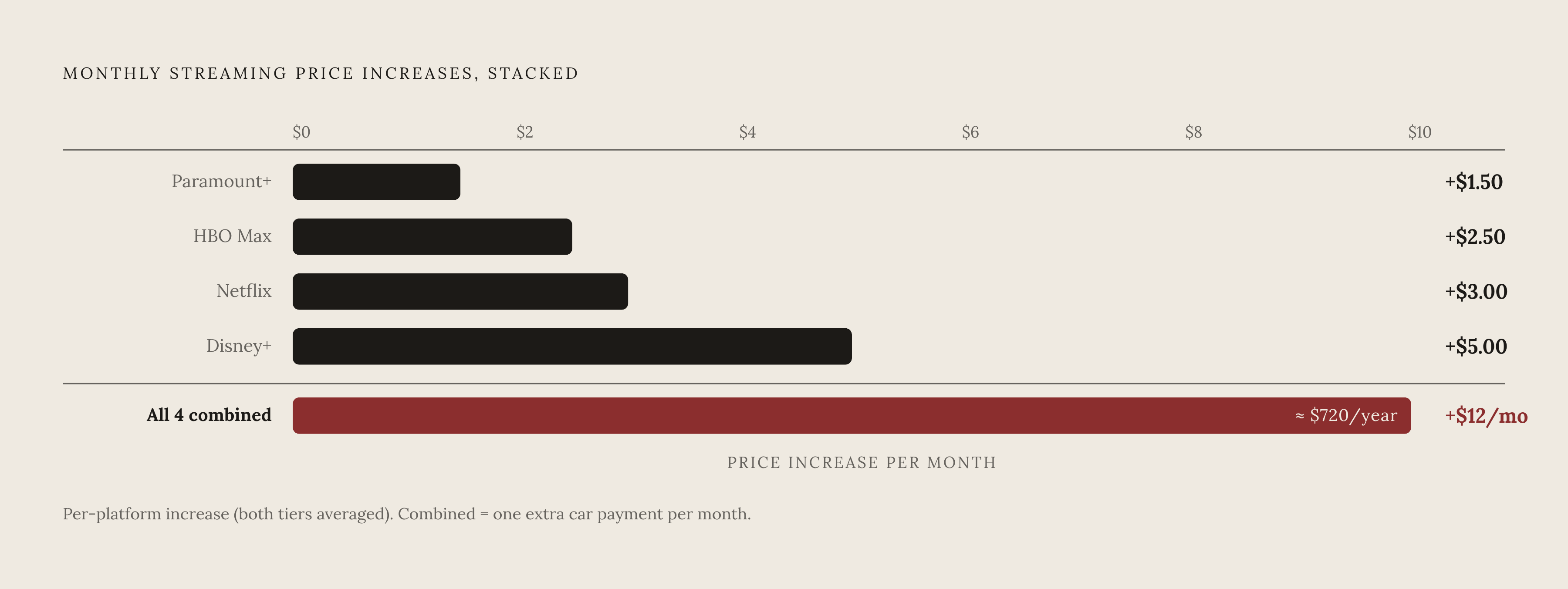
Why the average person dramatically underestimates what they're already paying
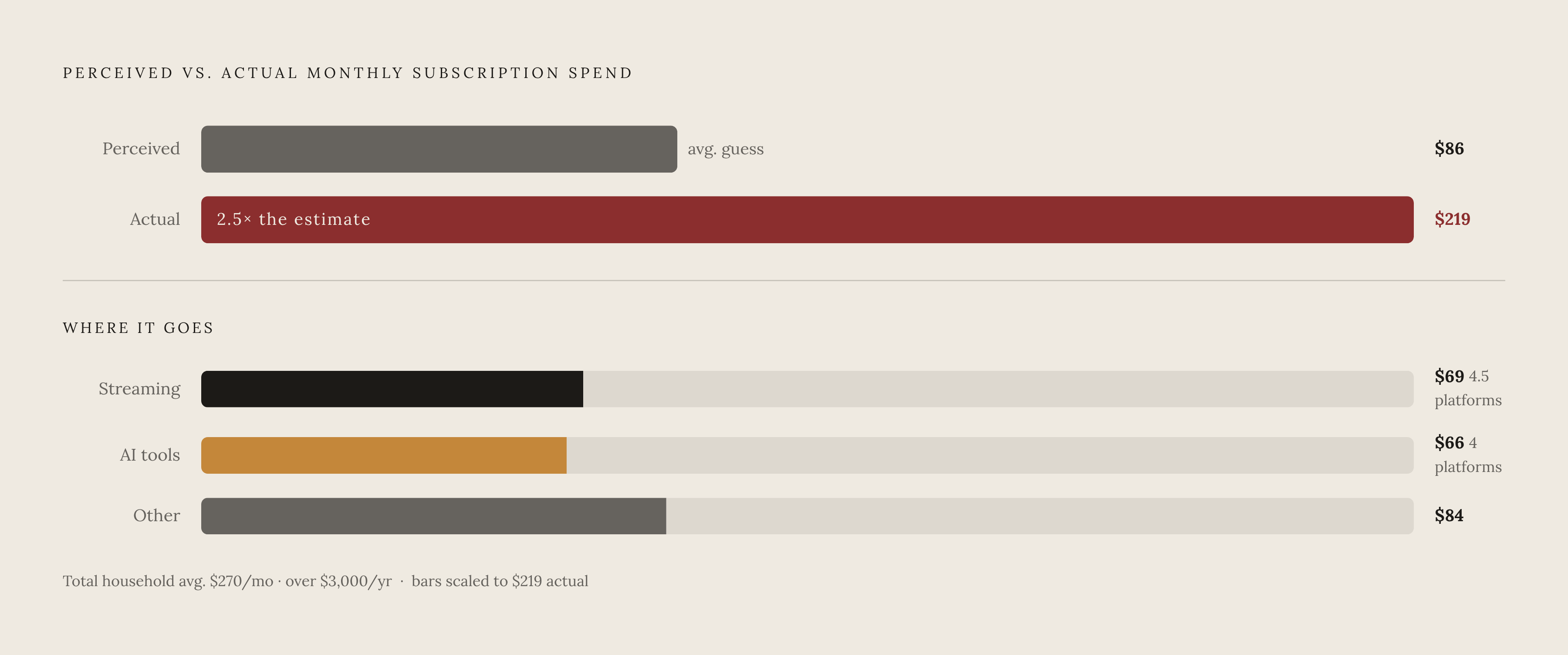
People guess their monthly subscription spend at $86, according to C+R Research. The real number, once every card and account gets tallied, averages $219. That two-and-a-half-times gap is the entire reason these hikes go uncontested: you can't catch a price moving if you never knew the starting number.
The structure, more than any individual person, deserves the blame. Subscriptions scatter across a personal card, a business card, PayPal, the App Store, Google Play, sometimes a partner's account nobody thinks to check. No spreadsheet lives in anyone's head that holds all of that at once. Surveys back this up: 74% of people admit recurring charges are easy to forget. The $86 figure reflects what people remember signing up for, not what's quietly piled up since.
Deloitte's 2025 survey put the average household at 4.5 streaming platforms, costing $69 a month, up 13% year over year, and that's one category out of several. Layer in music, gaming, and fitness apps, and the real household number climbs past $270 a month, well over $3,000 a year.
Then there's the category nobody's built any tracking habit for yet: AI subscriptions. Bango's 2025 survey found Americans pay for an average of four AI subscriptions, roughly $66 a month, with 14% paying for eight or more. This category barely existed a few years ago. A fresh blind spot now sits on top of an old one, compounding faster than anyone's mental math can follow.
The specific tactics services use to ensure increases go uncontested
None of this happens by accident. The tactics repeat across the industry with almost no variation, and the most underrated one involves what happens to the plan sitting quietly underneath the price hike itself.
Notifications get written to read like routine billing confirmations, not alerts worth opening. The real disclosure sits buried below the fold in a longer terms-of-service update, the kind of email most people delete without a second glance. Timing isn't random either. Increases tend to land right at renewal, the exact moment someone is least likely to sit down and ask whether the service still earns its keep.
Feature degradation does more damage than any sticker increase, because nobody thinks to watch for it. A company rolls out a new, cheaper "Basic" tier underneath the plan already on your card. Your plan keeps its name and its price, but somewhere in the shuffle it delivers less than it used to, relative to what's now on offer elsewhere in the lineup. The bill stays flat while the value shrinks, so you end up paying more for the same thing without the number on your statement ever moving. That quiet mismatch makes it the hardest version to catch by glancing at a bank statement.
Cancellation friction does the rest of the work. Subscription companies build multi-step cancellation flows on purpose: phone-only options, mandatory "pause" offers standing between you and the exit, forms that make you explain yourself three separate times before confirming. The goal isn't subtle: making accepting the new price feel easier than fighting your way out the door.
Auto-renewal seals it shut. No new agreement gets signed, no sign-up screen reappears, nothing changes except the number pulled from your account. Stagger that timing across platforms so no single billing cycle looks alarming enough to trigger a full audit, and the company controls the timing, the amount, and the notification method from start to finish.
The money that drains even when prices haven't changed — unused subscriptions and forgotten trials
Price increases are half the story. The other half is worse, because there's no price change to even notice: money leaking out for services nobody's touched in months.
A 2025 CNET report found the average U.S. adult spends $17 a month, over $200 a year, on subscriptions sitting there unused. Most people can't name which ones without checking.
Free trials deserve their own callout, because the design behind them reflects deliberate strategy, and the numbers make that impossible to dispute. Requiring a card upfront functions as a conversion mechanism, working on inertia rather than satisfaction: opt-out trials consistently convert at higher rates than opt-in trials that skip the payment details. That difference is the clearest signal in this whole piece: distrust any trial that asks for your card before it asks about your interest.
Three forces keep the cycle spinning, and none of them are really about the product. Loss aversion makes canceling feel like giving something up, even something never opened. Convenience bias means the hassle of canceling outweighs the annoyance of a small monthly charge, so the charge wins by default. Optimism bias convinces you future-you will finally use that fitness app more than current-you ever did. These are the same levers that let a quiet price increase slide through unchallenged; the inertia keeping a forgotten subscription alive is the same inertia keeping a slightly pricier one alive too.
What legal protections now exist — and what they don't automatically do for you
Regulators have caught up, at least on paper, and in some places the paper has real teeth. The FTC's Click-to-Cancel Rule requires that canceling be as easy as signing up. New York's Attorney General secured a $600,000 settlement with Equinox in June 2025 over cancellation obstruction and failure to disclose renewal terms properly. In January 2026, the FTC sued JustAnswer, alleging customers were enrolled in recurring monthly subscriptions while believing they'd paid a one-time fee.
States layer on their own rules. States have been tightening their own auto-renewal rules, generally requiring advance notice of price changes and clear disclosure of cancellation instructions before renewal happens.
None of that fixes the actual problem. A right to 15 days' warning is worthless if the notice lands in a promotional folder nobody opens. Grounds for a refund or a penalty-free exit only exist in practice once someone catches the discrepancy in the first place. The law offers protection on paper, but detection remains entirely on you, and that's the part these regulations were never built to solve.
How to actually catch price increases before they compound
The problem centers on detection, and most people reach for the wrong tool to fix it: a one-time cleanup, a January purge of the bank statement. That instinct is built for the wrong kind of threat. A single sweep can't catch something engineered to happen on a rolling, staggered schedule across twelve months.
A manual audit is the obvious starting point, and it has real limits worth naming upfront. Pull three months of bank and card statements and list every recurring charge. Check the Apple and Google subscription dashboards too, since app-store billing often shows up under a generic name that means nothing on your card statement. Compare current charges against any confirmation emails saved from the original sign-up. The catch: an audit is a single snapshot, telling you what's true today and saying nothing about the increase landing next quarter.
Trial discipline closes part of that gap. Set a calendar alert one to three days before a free trial ends, not on the last day when there's no margin for error. Virtual card numbers, built by services for exactly this purpose, can block a charge from a merchant entirely once the trial period lapses, removing the memory requirement altogether.
Negotiation is worth trying before canceling outright. Starting a cancellation flow frequently triggers a retention offer designed to keep you on the pricier plan instead of losing you entirely. Bill negotiation services work on a success-fee model, usually a percentage of whatever annual savings they land, which only makes sense on bills where there's real room to negotiate to begin with.
Subscription tracking apps have gotten more visible through 2025 and 2026 for surfacing charges people genuinely forgot existed, and they're useful for discovery. Most, though, are reactive dashboards: they show what already happened, not what's about to happen next month, which means they're solving last year's problem while this year's hike is already loaded into the billing cycle.
The actual crux of the matter is this: because these increases are ongoing and deliberately staggered, catching them takes continuous monitoring, not a single cleanup project every January. Tools that connect to bank accounts, email, and app-store billing in read-only mode can flag a price change the moment it appears, with the exact dollar difference and the next step already spelled out. Compass+ runs on that model: it watches across those sources continuously, flags increases, unused subscriptions, and trials about to convert, and hands over the dollar amount and the fix already worked out, offering a way to stay ahead of the damage rather than discovering it after the fact.