Tools That Claim Amazon Late Delivery Credits Without You Asking
Automation fills the gap between qualified refunds and the effort required to claim them.
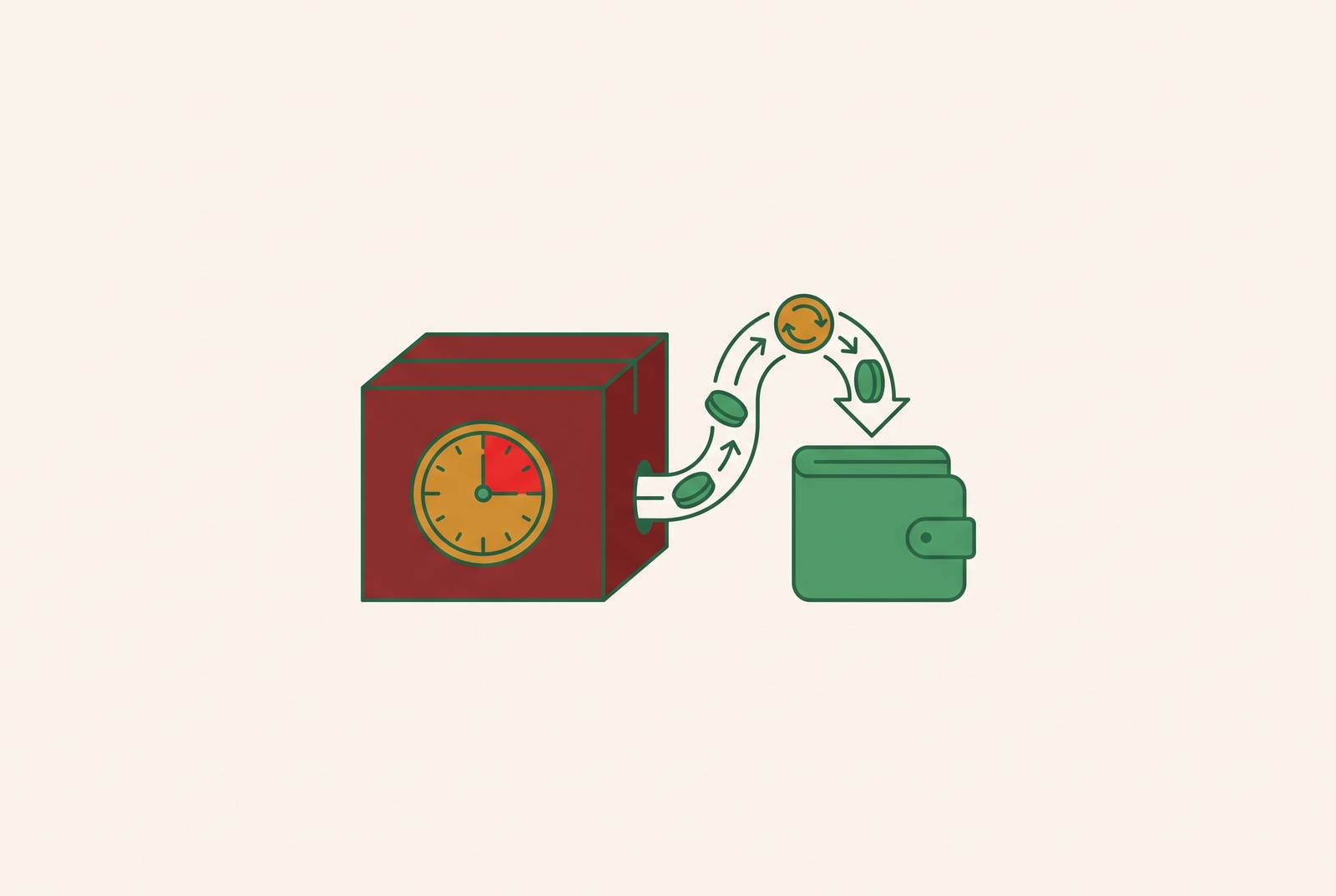
Amazon's guaranteed delivery promise is a formal policy, spelled out in writing, not a favor a support rep decides to extend. It applies only to orders that showed a guaranteed delivery date at the moment of checkout. Amazon's Delivery Guarantees policy states that when guaranteed delivery is available, the checkout page will show the date and the cost, and if a delivery attempt isn't made by that date, Amazon will refund the shipping fees. That line is the whole threshold. If an order only showed an estimated shipping window rather than a guaranteed date, there's no guarantee to enforce, no matter how late the package runs.
For purchases sold and shipped by a third-party seller, the backup protection is the A-to-Z Guarantee. Amazon's own page describing it says this guarantee applies when a customer buys from a third-party seller who handles their own customer service, and it covers both late delivery and the condition of the item on arrival. One of the qualifying reasons listed is straightforward: the seller failed to deliver within the maximum estimated delivery date. Claims have to go in within a set window tied to that date, so the clock starts the moment the promised window closes, not whenever the shopper happens to notice.
The timing rules here work in the shopper's favor. A claim can go in as soon as the estimated delivery date has passed. There's no 48-hour grace period to sit through, no requirement to send the item back, and no photo of a damaged box or empty porch needed to make the case. That's a lower bar than most retail return processes ask for: the policy was built to be simple to invoke, even if few people invoke it.
The outcome, when it works, is about as clean as consumer protection gets. Amazon's help documentation makes clear the A-to-Z Guarantee only applies to orders sold and fulfilled by a third-party seller, not orders Amazon itself shipped. But within that scope, when a claim is approved, the refund stands and the shopper keeps the item. No return, no store credit workaround, no partial settlement. Few disputes in online retail resolve this cleanly in the buyer's favor, so the rule is worth understanding precisely rather than assuming it works the same way for every order.
Why the same policy produces different outcomes
Qualifying for a credit and actually getting one are two different events. The written policy sets the floor, but what a shopper walks away with depends on a chain of human and procedural variables that have nothing to do with whether the order technically qualifies. Two people can have the exact same late package, filed under the exact same policy, and end up with completely different results, because the process leaves room for how the claim gets written, where it gets filed, and how firmly the shopper pushes.
A lot of claims fail for reasons that have nothing to do with eligibility. Filing a complaint on social media rarely triggers a refund, no matter how viral the post gets, because that's not a recognized claim channel. Some shoppers claim a package never shipped when tracking data clearly shows it moving through the delivery network, and that mismatch kills the claim on sight. Others leave out the order number, or ask for compensation beyond what the policy actually allows. Every one of these mistakes is avoidable, and every one of them is common.
The procedure itself isn't complicated, but it is specific, and skipping a step costs the claim. Check the tracking information first. If the package only recently missed its delivery window, give it a short buffer before escalating. Then contact support directly through Help, then Contact Us, bringing the order number, the expected delivery date, the tracking details, and copies of any prior messages already sent about the issue. For third-party seller orders, there's an extra step most people don't know about: the seller has to be contacted first and given a real chance to fix the problem before the A-to-Z Guarantee can be invoked. Skip that step, or do it halfheartedly, and the eventual A-to-Z claim can get denied on a technicality that has nothing to do with whether the package was actually late.
If the A-to-Z claim gets denied and the purchase was made by credit card, a chargeback through the card issuer is the last resort left. That route carries its own deadlines and paperwork. The FTC's guidance on disputing charges states that a dispute has to be sent within 60 days of the first bill containing the error, and it has to include copies of receipts or other supporting documents. That's a real process with a real clock, not a casual phone call. Writing a correct, complete claim from scratch, and knowing which of these paths to take and in what order, takes real time and attention most shoppers don't have budgeted for a comparatively small shipping refund.
The chain of vigilance most shoppers never complete
Most eligible credits go unclaimed because collecting on them requires a long, unbroken sequence of actions, and breaking any single link in that sequence means the credit disappears for good.
Walk through the sequence. A shopper has to notice the delivery was late in the first place, which sounds obvious until the package in question is one of a dozen arriving that week. They have to know the guarantee applies to this particular order, which depends on remembering whether a guaranteed date was shown at checkout weeks earlier. They have to pull together the order number, the tracking history, and the original delivery promise. They have to file through the correct channel, in the correct format, before the window closes. Every one of those steps is manageable on its own. Strung together, unprompted, with no one reminding the shopper to do any of it, the sequence breaks more often than it completes.
The 90-day deadline on A-to-Z claims is where that breakdown becomes permanent. A shopper who notices the late delivery, means to deal with it later, and then forgets, loses the option entirely once that window closes. Most people don't track which of their Amazon orders ran late and on what date, so there's no internal prompt telling them a window is about to shut.
This isn't unique to shipping. The same pattern of financial inattention is visible across recurring charges and time-sensitive money matters generally: most consumers underestimate how much they spend on subscriptions every month, and plenty forget to cancel free trials before they quietly convert into paid charges. Delivery credits sit in that same category. The money is time-limited, requires the shopper to act first, and comes with no built-in reminder. Amazon doesn't notify anyone that a refund is sitting there waiting. It waits to be asked.
There's one telling exception that proves how rare this is. The FTC ran a refund program tied to Amazon, documented on the FTC's own refunds page, where credits went out automatically as part of a government enforcement action, requiring no claim from consumers. That's the passive model working in the shopper's favor, and it's rare precisely because it took a federal enforcement action to make it happen. Outside of that kind of exception, the default for a late delivery credit is silence, and the shopper is the only one who can break it.
How automated claim tools work, step by step
Automated claim tools exist to take that entire sequence of noticing, remembering, and filing off the shopper's plate, replacing it with a background process that runs on its own. Instead of the credit waiting to be found, it gets surfaced directly.
Settlemate, available on iOS and Android, is the most complete example of this approach currently on the market. After a user connects the app to an email inbox, it continuously scans incoming order confirmations, promised delivery dates, shipping updates, and delivery notifications across whatever retailers the user shops with, not just Amazon. When a package misses its promised delivery date, the app catches the miss on its own and, where possible, files the claim on the user's behalf. The shopper doesn't have to remember a guaranteed date was shown at checkout three weeks ago, or dig through old emails for a tracking number. The scanning already did that.
This fits into a wider shift happening across AI tools generally. Software is moving from reading information to acting on it. Reading an inbox and filing a claim is what's sometimes called a read-and-act tier: the tool observes, then takes a defined action on the user's behalf. Newer systems coming out of companies like Meta and OpenAI are pushing further, into territory that involves preparing and carrying out actual payments. Automated delivery claims are an early, narrow version of a pattern that will reach a lot more corners of personal finance.
The trade-offs of these tools
The case for automation here holds up, but the category isn't without real costs, and a shopper weighing whether to use one should understand what's being handed over before connecting an inbox.
The biggest trade-off is data access. Even a strictly read-only connection to an email inbox is a much bigger exposure than filling out a one-time form with an order number and a tracking code. An inbox contains far more than shipping confirmations: it often holds bank statements, medical correspondence, and other personal records sitting in the same place. Granting an app ongoing access to scan that inbox means trusting it with everything else sitting alongside the order confirmations, not just the data the claim actually needs. The risk scales with how much sensitive material lives in that inbox, which for most people is a lot.
Read-only access is meaningfully safer than granting payment or transfer authority. A tool that can only read email can't move money out of an account, which puts a hard ceiling on the worst-case outcome. But safer isn't the same as risk-free, and the honest framing is a trade: the shopper gives up some privacy in exchange for recovering credits that would otherwise go unclaimed. A tool built well at this tier should do a few things at minimum: catch the missed delivery without being told, file the claim itself rather than just flagging it, and keep its access strictly read-only with no ability to send money or authorize payments.
Evaluating whether a claim tool does the work it promises
The real test for any tool in this category is whether it removes the vigilance chain described earlier, start to finish, rather than just shortening one part of it, since a tool that monitors deliveries but then hands the shopper a pre-filled form to submit manually has moved the work around, not eliminated it. The shopper still has to notice the notification, open the app, and finish the job themselves. The chain got shorter but never actually closed.
A tool worth trusting detects a missed delivery on its own and files the claim itself. It should show the shopper a specific dollar figure and a clear outcome, not a vague prompt to go investigate further. Its access to financial or email data should be read-only, with no authority to send messages as the user or move money on their behalf. The underlying data itself should sit with an established, audited third party, not the tool's own servers. And the tool's own subscription terms and cancellation process should meet the same standard of simplicity it claims to apply to the refunds it recovers.
Amazon's side of this is shifting too. A policy tracker from SPS Commerce documents that automated reimbursement processing now covers some seller-side scenarios directly inside Seller Central, which shows the infrastructure for automatic handling already exists in part of the system. But that automation doesn't cover every scenario. Manual claims are still necessary in plenty of cases. The detection and filing burden remains squarely on the shopper for now.
The dollar value of any single missed delivery credit is small next to bigger financial leaks like subscription creep or duplicate charges sitting unnoticed on a statement. But credits like these are consistently available to anyone who qualifies, and they are more within reach now than they've ever been. The chain that used to require a shopper to notice, remember, and act within a narrow window can now run quietly in the background, surfacing the credit on its own.