The Best Subscription Tracking Apps for People Who Lose Track of What They Pay Each Month
These apps find hidden charges, but miss annual plans and free trials that slip through.
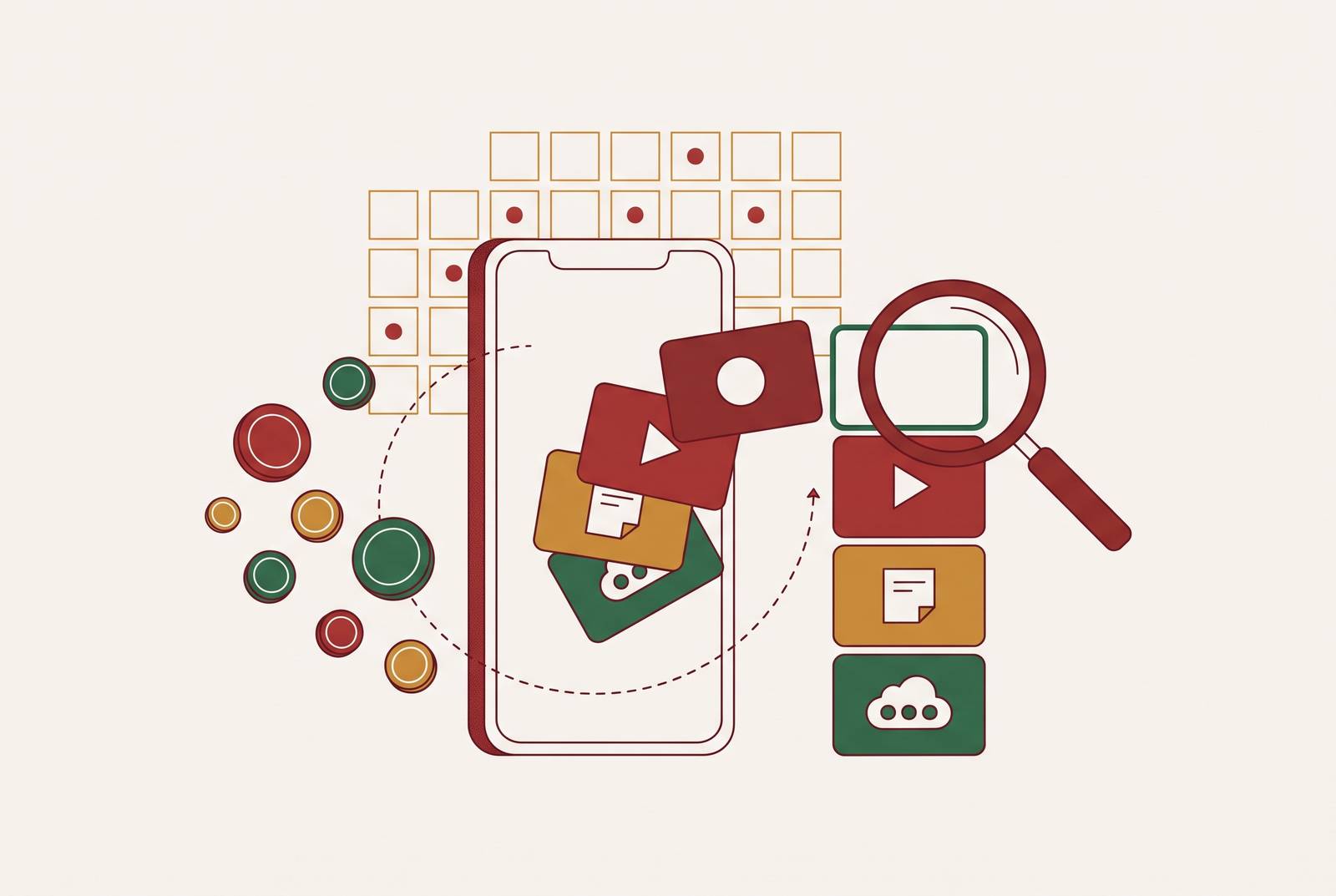
WalletHub suits forgotten monthly charges, LowerMySubs offers statement scanning without a bank login, and ReSubs or SubTracker suit renewal reminders. Finding payments does not by itself prevent unwanted ones, especially with annual plans, free trials, and quiet price increases.
Why subscription tracking apps exist and what problem they were built to solve
People often think they spend less on subscriptions than they actually do. The billing mechanics help hide the total. Small monthly payments seem negligible on their own, annual charges look like one-time purchases, and free trials turn into bills without another buying decision. Self Financial’s 2026 survey found that 70% of respondents forgot to cancel a free trial at least once, leaving them with a paid subscription they had not intended to keep. A tracker exists to close that gap between what people remember agreeing to and what keeps leaving their accounts.
The two fundamentally different approaches to tracking subscriptions
Subscription trackers start with one basic choice. They either connect to a bank account and look for recurring charges, or they ask the user to build the list. Bank-connected tools read transaction history, so they can surface a service someone has forgotten entirely. Manual tools record the subscriptions someone enters and remind them when payments are due.
A bank connection can find direct monthly payments without requiring someone to remember each service, but it cannot reliably untangle every billing arrangement. A manual list can include an annual renewal or a share of a family plan, provided someone adds it. It also avoids giving the tracker bank access. Its weakness is omission, because an accurate reminder system is no help for a subscription missing from the list.
There is also a middle path between those approaches. A user can export a bank statement and scan it for recurring charges without maintaining a bank connection. This offers automated discovery from a statement snapshot. The distinction becomes important after the first audit, because new payments will not appear until another statement is scanned.
What auto-detection actually catches — and the categories it consistently misses
Bank-connected trackers are good at spotting monthly charges paid directly from a card or checking account. Those payments repeat in a pattern the software can spot. The problems begin when a subscription does not leave that pattern, or when the bank record conceals the service behind it. A clean dashboard is not proof that every subscription is on it.
Annual plans are a clear example of that limit. A charge that appears once can be treated as a one-time purchase. Most auto-detection engines miss these payments or flag them too late to help with the renewal. Apple or Google Play can appear as a lump sum on a bank statement, so the tracker sees the billing intermediary rather than the individual subscriptions inside the payment.
Free trials pose a timing problem instead. By the time the first paid charge reaches the account, it is already too late to stop it. Shared and family plans can be missing from the list when someone else in the household pays or splits the cost. These are limits of the information available.
Which subscription tracking apps are best for your needs?
ReSubs is a dedicated tracker for iOS and Android with manual entry, CSV import, Gmail receipt scanning, and AI extraction from screenshots and billing emails, plus a limited free tier and Premium for unlimited subscriptions. It suits people who want cross-platform tracking without bank credentials, with trial-to-paid reminders, subscription lifecycle tracking, and automatic currency conversion. Those import options reduce entry work, but they do not provide bank-based discovery of charges the user has forgotten entirely.
Bobby is a manual tracker centered on iOS, with a free base app, a one-time purchase for additional features, and data kept on the device. It suits iPhone users who want to keep a private list and get renewal reminders without paying for another app over and over. It has no auto-detection, Android version, or web access, while development has been slow and intermittent, though Apple Silicon Mac and Vision Pro support extends its reach within Apple’s devices.
Subby is an Android manual tracker with unlimited free subscription tracking, ads on the free version, and a one-time PRO purchase to remove them. It suits Android users who want a no-cost list without bank access.
Tilla offers manual tracking without bank access on Android and Huawei AppGallery, with a limited free tier and a one-time Premium purchase. It is another option for Android users who prefer entering their subscriptions to connecting an account. Its free subscription limit restricts larger lists, and Premium pricing varies by country and store.
SubTracker works on the web and through an installable PWA on iOS and Android, offering unlimited free tracking with no time limit, optional bank linking, paid renewal reminders, shared workspaces, and CSV and JSON export. It suits people who want a manual starting point with configurable reminders for each subscription, room for a household or small team, and the option of bank access later. The manual-only path cannot discover forgotten charges, reminders cost extra, and installation requires the web, with no App Store or Google Play listing.
TrackMySubs is a web-based tracker without bank access, offering paid tiers with folders, tags, alert recipients, CSV import and export, currency handling, expense categories, and multi-user plans. It suits freelancers or households who need more help sorting and sharing a large subscription list than finding payments they do not know about. Its interface shows its age, its free tier runs out of room quickly, and its extra controls may be more than an individual needs.
LowerMySubs is a free web tool that scans a user-exported CSV or PDF bank statement in the browser without the file leaving the device or requiring a Plaid connection. It suits people who want automated discovery without a persistent bank link, with manual entry, an audit feature, negotiation scripts, cancellation guides, and cheaper alternatives available too. It can only find charges through the latest statement it is given, and its cancellation guides leave the user to cancel.
WalletHub offers free, unlimited bank-linked tracking on iOS, Android, and the web, using AI-powered transaction identification within a broader set of financial tools. It suits US-based users who want automatic discovery without a premium tier or ads and are comfortable with access to broad financial data. Subscription tracking is a secondary feature, the service is funded by affiliate revenue, and its wider offering includes credit information, credit card recommendations, and budgeting tools.
Quicken Simplifi connects to banks to download transactions and scans for recurring payments when accounts are linked. It suits people who want subscription tracking within a broader financial plan.
The security tradeoff that bank-connected trackers ask you to accept
Bank linking raises two different questions that often get mixed together. Can the app move money, and how long can it see financial data? Standard read-only Plaid integrations, including Transactions and Balances, let an app read data but do not let it move money. That restriction is enforced at the API level through Plaid’s credentialing system. Apps using its separate Transfer or Payment Initiation products can move money only with explicit approval and separate user authorization.
Plaid uses 256-bit AES encryption at rest, TLS in transit, and holds SOC 2 Type II certification. A connection can remain active after the linked app is deleted or abandoned, until it is explicitly revoked. So a breach of an app someone forgot long ago can expose data on their current transactions. Both the data shared on signup and the data that remains accessible afterward are at risk.
Readers who do not want that bank connection can use manual tracking. Bobby keeps data on the device, while LowerMySubs scans an exported statement on the device without keeping a bank link open. Other manual options avoid bank credentials but should not be assumed to use the same storage model. SubTracker, for example, stores data in the UK under UK GDPR. Read-only access is meaningfully safer than credential sharing, but choosing it still means deciding how much continuing visibility the convenience is worth.
Why the harder leaks — annual charges, price drift, free trial conversions — need a different kind of watching
The harder leaks require watching deadlines. A free-trial alert helps several days before the bill is due, while a warning for an annual renewal may need to come weeks ahead. By the time either charge appears in a bank feed, the relevant cancellation window may have closed. SubTracker’s per-subscription controls address that need more precisely than one global reminder schedule would.
Price drift requires another kind of comparison. A payment can still be correctly labeled as recurring even as the amount quietly goes up from one billing cycle to the next. To catch that change, the app has to compare each charge with the amount before it as well as recognize the merchant. Discovery alone does not establish that an app will warn about increases. A tracker that finds every monthly service can still leave the user unaware that the same list now costs more.
For free trials, the strongest protection is often earlier than any reminder. The practical strategy is to cancel at signup rather than wait for expiration, since most services let access continue through the trial period. For trials a reader is skeptical about, the other options in this approach are a virtual card or a near-empty account to prevent the auto-charge.
Someone has to note when the trial ends, keep track of the annual renewal deadline, or compare each amount with the one before it. A manual app can watch a known deadline once it has been entered, while a statement scan only knows the transactions in that export. No single app described here establishes complete coverage of discovery, deadlines, and price drift.
How to pick the right tool given what is actually leaking from your accounts
The practical choice starts with what is going wrong. If the problem is not knowing what is being paid for at all, start with a bank-connected tool such as WalletHub or a LowerMySubs statement scan. The former offers ongoing access to transactions, while the latter avoids a persistent connection. Either can establish a baseline of direct recurring charges. Neither should be mistaken for a complete inventory of app-store subscriptions, shared plans, and annual commitments.
If the subscriptions are known but renewals keep slipping past, choose a reminder-focused tool such as ReSubs or SubTracker. For tracking without bank credentials, Bobby suits iOS users, Subby and Tilla serve Android users, and ReSubs or SubTracker offer cross-platform options. For subscriptions managed within a wider budget, Simplifi is the relevant fit.
LowerMySubs provides cancellation guides, while SubTracker offers bill negotiation for a percentage of savings, but neither feature establishes automatic cancellation of unwanted subscriptions. If the starting problem is still unclear, run a one-time audit by exporting a statement for the browser scanner or reviewing three to six months of statements manually. Then choose the tracker that can maintain the resulting list and warn about the deadlines being missed.