AI Agents That Catch Duplicate Charges and Silent Bill Increases Before You Do
Detect hidden subscription charges and price hikes before they drain your account.
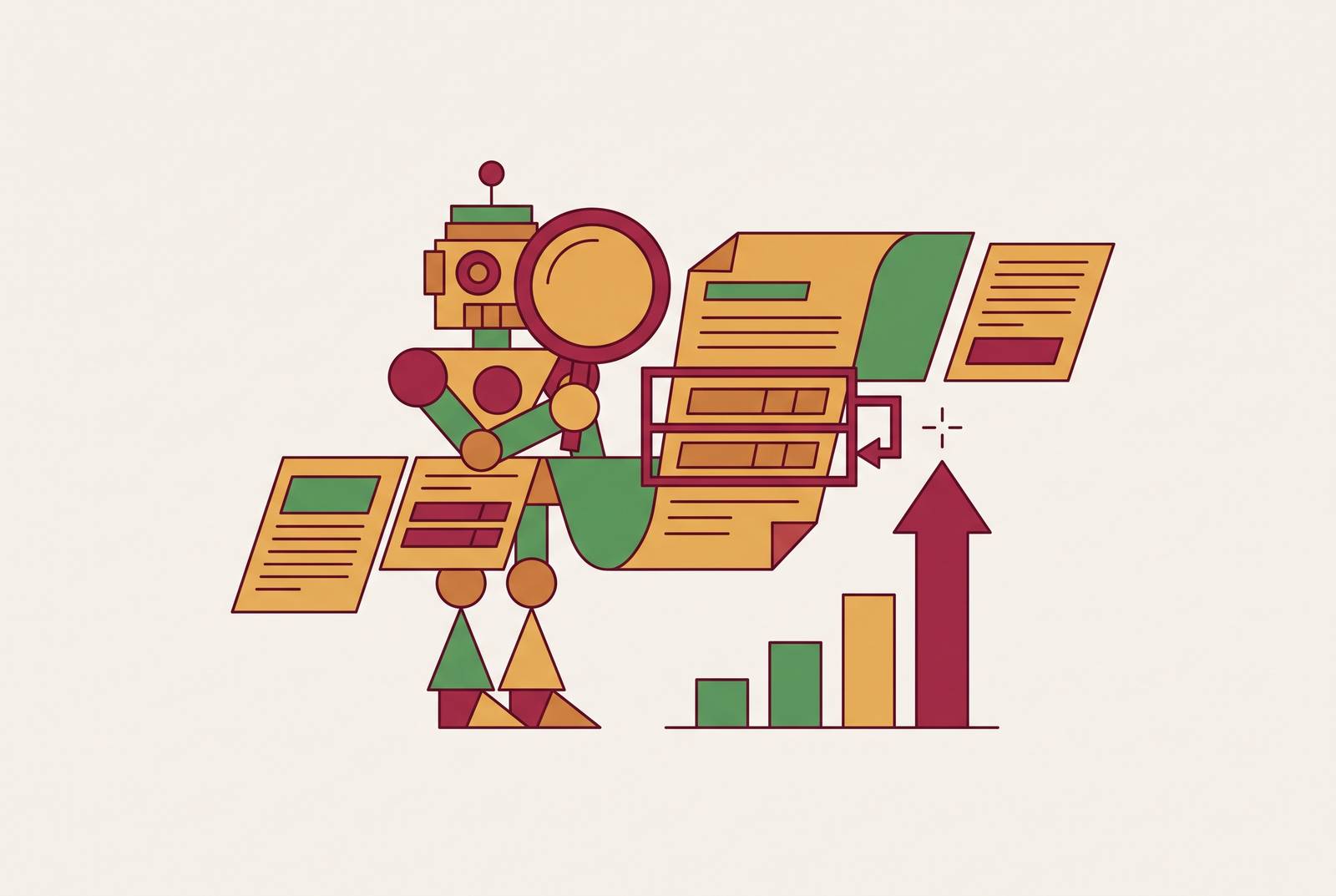
Most people spend more on subscriptions than they think they do, and the size of that gap is the clearest evidence that subscription billing is built to be missed. They're just small enough, frequent enough, and spread across enough accounts that no one ever adds them up in real time. This piece lays out how that design works, why checking your statements more carefully won't fix it, and what a continuously monitoring AI agent can do instead.
How subscription billing is designed to evade human attention
The gap between what a household actually spends on subscriptions and what it believes it spends is the measurable result of a billing architecture built to stay under the threshold where people start paying attention. Instead of one large, noticeable bill, subscription companies create many small ones. Each charge sits individually below the dollar amount that would make someone stop and ask a question. Spread those charges across two or three payment methods, stagger the billing dates, and no single statement ever tells the whole story.
Auto-renewal is the engine that makes this work. The decision to continue is never interrupted, so the subscription rolls forward by default, month after month.
Then there's the pricing strategy sometimes called salami slicing: raising prices in increments small enough that canceling feels like more effort than the increase deserves. They don't contest them because the math favors the seller. Spending ten minutes to cancel a service over such a small increase feels disproportionate, even when the increase repeats every year.
The back half of 2025 showed this strategy working at scale. Each increase ran $1 to $3 per service, small enough that any one of them was easy to shrug off. Added up across a household juggling five or six streaming and music subscriptions, the cumulative hit becomes real money that nobody consciously agreed to pay.
None of this is accidental. Inertia isn't a side effect of subscription billing, it's the revenue model. The subscriber who stops looking at the charge is the most profitable subscriber a company can have. That's a design choice. The fix has to be a design choice too. A behavioral fix (telling people to pay closer attention) can't undo an architecture built specifically to defeat attention.
Why periodic human audits cannot close the gap
The standard advice, check your statements more often, treats a continuous problem as if it were a one-time task. Billing doesn't pause while you review it. It runs every day, on dozens of different cycles, and a monthly glance at a statement is a snapshot of something that never stopped moving.
Duplicate charges and silent price increases don't announce themselves. They land on the usual billing date, for an amount that looks normal unless you happen to remember what you paid the month before. A $1.50 increase doesn't look like an error. It looks like the bill.
Timing makes this worse. The ability to act on it doesn't.
Then there's the problem of where the charges actually live. Nobody sits down once a month and reconciles three card statements against memory of every signup from the past two years.
Memory itself breaks the audit model. Roughly four in ten consumers have forgotten about a subscription entirely while still being charged for it. By definition, a person can't audit for a service they don't remember signing up for. The charge is just unfamiliar background noise they've stopped registering.
Free trial conversions are the hardest case of all. The charge that converts a free trial to a paid plan looks exactly like a legitimate first charge, because it is one. There's no prior month to compare it against, no red flag in the amount. The only way to catch it is to know the conversion date in advance, and the window to cancel closes the moment that date arrives.
Budgeting apps and spending dashboards address part of this, by showing recurring charges after they clear. That's useful information, but because traditional budgeting dashboards only show what happened after the fact, it arrives after the window to contest or cancel has already closed in most cases. An AI monitoring agent, by contrast, works continuously across your accounts, flagging a silent price increase or duplicate charge the moment it appears, before the window to dispute or cancel closes. It operates on the billing cycle's rhythm, not on your monthly review schedule.
Continuous, cross-account pattern matching
An AI agent holds the full picture continuously, comparing every charge against every prior charge, across every connected account, every day, catching what human attention, prone to fatigue, misses.
An agent's real strength is synthesis. Right now, the information needed to catch a bad charge is scattered: a card statement shows the charge, an account page shows the renewal date, app or device activity can show whether the service is even being used, and a quick search can surface cheaper alternatives. An agent can pull all of that together and hand back one compact decision: keep it, downgrade it, switch it, try to negotiate a lower rate, or cancel it.
Continuous monitoring matches continuous billing. Because the agent watches every billing cycle rather than reviewing after the fact, it can flag a price increase in the exact cycle it first appears, while the window to act is still open. Duplicate charges get flagged because the agent holds the full billing history and can compare this cycle against every prior cycle, across every connected account, at once.
Access matters here, and the right model is read-only. An agent needs to see everything in order to compare everything, but it never needs the ability to move money to do its job. Visibility and control are separate functions, and keeping them separate is what makes connecting more accounts the right call rather than a risk, a point that matters more once the security question comes up directly. Compass+ is built around exactly this kind of continuous, cross-account monitoring, designed specifically to catch the charges and increases that a once-a-month statement review was never going to find.
Finding bills that secretly raised their rates: duplicate charges, bill creep, and free trial conversions in practice
Most of the money that slips past consumers unnoticed falls into three categories, and each one has its own detection signature, a specific pattern an agent is built to recognize that a human scanning a statement typically isn't looking for.
Duplicate charges
Duplicate charges come from billing system errors, payment retries that succeed after an initial failure, or simply forgetting a subscription already exists on one card before signing up again on another. The detection signature is the same merchant, the same or nearly the same amount, appearing twice within a billing period or split across two payment methods. That's exactly the cross-account, cross-period comparison a human doesn't routinely run, because it requires holding two statements side by side in memory.
When a customer flags an unrecognized charge, an AI agent can pull the transaction details, verify whether the charge is legitimate, and either explain it with supporting evidence or start a refund. For subscription billing disputes specifically, the agent checks the full billing history, applies a prorated refund where appropriate, and cancels or pauses the subscription so the same charge doesn't recur. Timing matters here too: disputing a duplicate charge through a card issuer usually requires acting within a defined window, and an agent that catches the charge in the cycle it appears preserves that window in a way a monthly audit often can't.
Silent bill increases
The detection signature for a silent increase is the same merchant, with a charge that differs from the prior period by an amount too small to trigger manual attention on its own. Almost none of these options get used today, simply because almost nobody notices the increase in time to use them.
Free trial conversions
The structural vulnerability here is calendar-based, not statement-based. Catching this requires calendar awareness, not just statement scanning: an agent that knows the conversion date can flag it before the charge clears, not after.
This is a recognized enough problem that regulators have tried to act on it directly. The FTC updated its Negative Option Rule in 2024 specifically to target subscription traps, requiring that canceling be as easy as signing up, though the rule was later vacated by the Eighth Circuit and is no longer in force.
Price-drop windows and delivery credits as money already owed that no one is claiming
The same monitoring gap that lets subscription charges slide by also leaves money on the table in retail and shipping, where consumers have real, enforceable rights that simply go unclaimed because no one is watching the clock.
Agentic tools now exist specifically to track prices after purchase across retailers like Shopify, Walmart, Best Buy, and Target, detect drops that fall within a merchant's price-match window, verify eligibility, and put together an automated refund claim. The consumer has to claim it, though, and most don't, because figuring out which orders even qualify and then filing the claim takes more effort than any single credit seems worth.
The logic is identical to subscription creep. Added up across a household's purchases over a year, the total stops being trivial.
There are real limits here. An agent can't make a fare refundable, can't create legal eligibility where none exists, and can't guarantee that a retailer, airline, or card issuer actually pays out. What it can do is identify eligibility and prepare the claim. The outcome still depends on the merchant's response, so setting that expectation accurately matters more than oversell.
Why connecting more accounts is the right call
Connecting financial accounts to an AI agent means separating two distinct capabilities: whether the agent can see your money, and whether it can move it.
Read-only access is the structural protection. The consumer keeps exclusive control over every financial action, full stop on who gets to move money.
Partial connection creates partial coverage, and partial coverage is exactly the gap that lets charges slip through. Limiting what the agent sees doesn't make the system safer, it just recreates the same blind spot a once-a-month human audit already has.
OpenAI's "Finances in ChatGPT" launched May 15, 2026 for U.S. Pro subscribers and is now available on every U.S. plan, including Free and Go, across web, iOS, and Android. A mainstream consumer product from a company most people already trust has effectively normalized read-only, multi-account connection as the standard, sensible architecture, not an edge case.
Connecting email, calendar, and purchase history alongside bank accounts isn't expanding the privacy surface recklessly. The right amount of access is whatever's needed to find what's leaking, and withholding that access just leaves the monitoring gap wide open.
What proactive agents let consumers recover
A financial monitoring tool's value is about whether that information reaches the consumer while they can still do something with it, and that's the line separating a dashboard from an agent.
An agent flips that order. It doesn't wait to be asked. It watches continuously and sends word the moment it spots something worth acting on, the dollar amount, the merchant, and the window still open attached to the alert, rather than a monthly report arriving after the opportunity has already passed.
That's what "proactive" means here: the finding shows up as an assignment already scoped, not a project the consumer has to go start on their own.
The gap between what households actually spend on subscriptions and what they think they spend is proof the architecture is working, and closing that exact gap is what an AI agent is for. By watching in the background for the silent price hikes, duplicate charges, and forgotten subscriptions that slip past human attention by design, an agent can surface the exact dollar amounts being lost while there's still time to act on them: the duplicate charge caught in its first cycle, the silent $1.50 increase flagged before it becomes the new normal, the free trial canceled before the billing date hits, the price-drop refund filed inside the merchant's window. None of these amounts are large on their own. Together, across a year, they add up to something real.
Compass+ connects to bank accounts, email, calendar, Amazon, and subscription services in read-only mode, and monitors continuously for duplicate charges, price increases, promised refunds, unused subscriptions, and free trials about to convert, surfacing each one with a specific dollar amount and a clear next step. Subscription billing is built to profit from the gap between what consumers are owed and what they actually claim. An agent built to close that gap continuously is the structural answer to a structural problem, and the money it finds was already the consumer's to begin with.