Subscription Services With No Easy Cancellation Online
Companies deliberately bury cancel buttons to keep you paying.
Eighty percent of U.S. adults paid for at least one subscription between April 2024 and April 2025. Some of those subscriptions are easy to walk away from; a meaningful chunk aren't, and that's not an accident of bad design. Companies make cancellation hard on purpose, because friction on the way out is worth real money, and the numbers back that up.
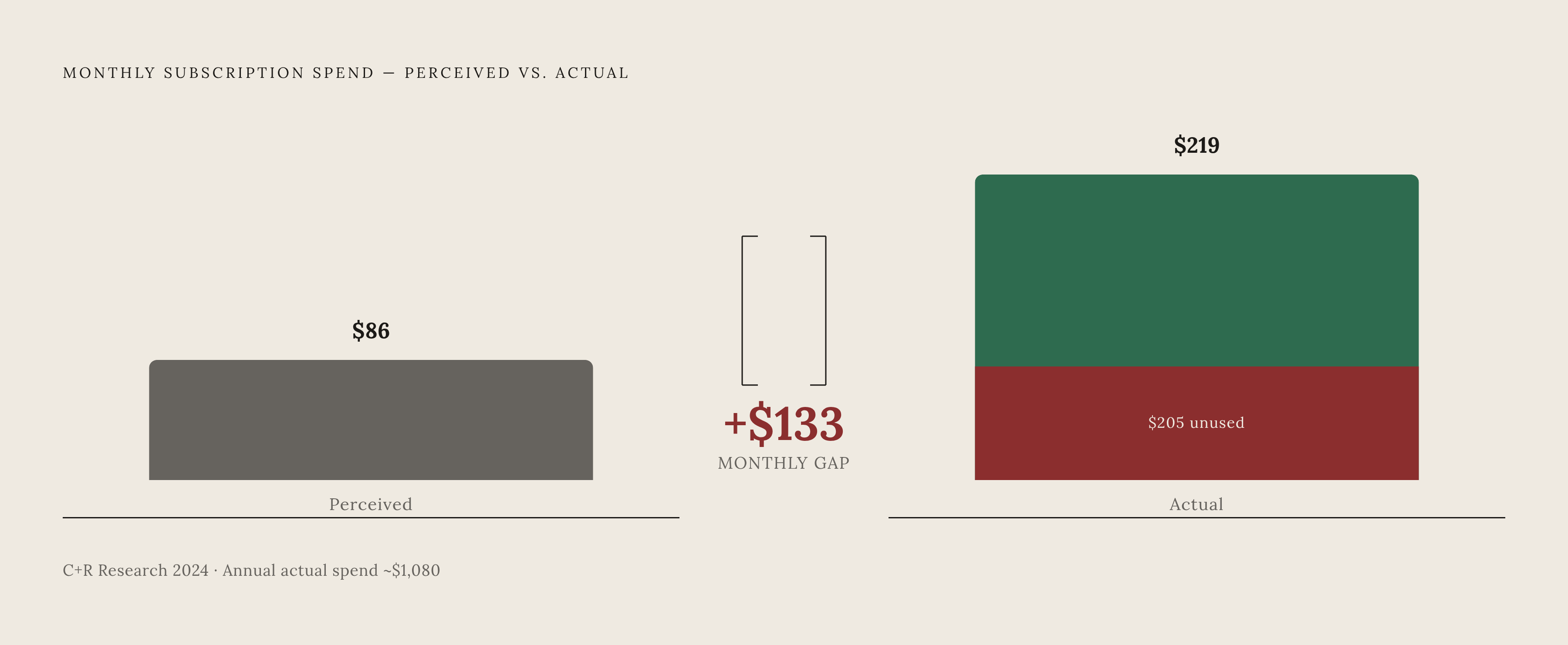
The average adult spends $1,080 a year on subscriptions. Of that, roughly $205 goes to services people don't use or can't quit without a fight, and that $205 is built into the cancellation flow on purpose. Consumers think they're spending about $86 a month on subscriptions when the real number is closer to $219, according to C+R Research in 2024. A $133 monthly gap between what people think they owe and what they actually owe doesn't happen by accident; it's the friction working exactly as designed. So which companies do it, and how exactly, is the question worth answering.
The specific dark-pattern tactics companies use to block online cancellation
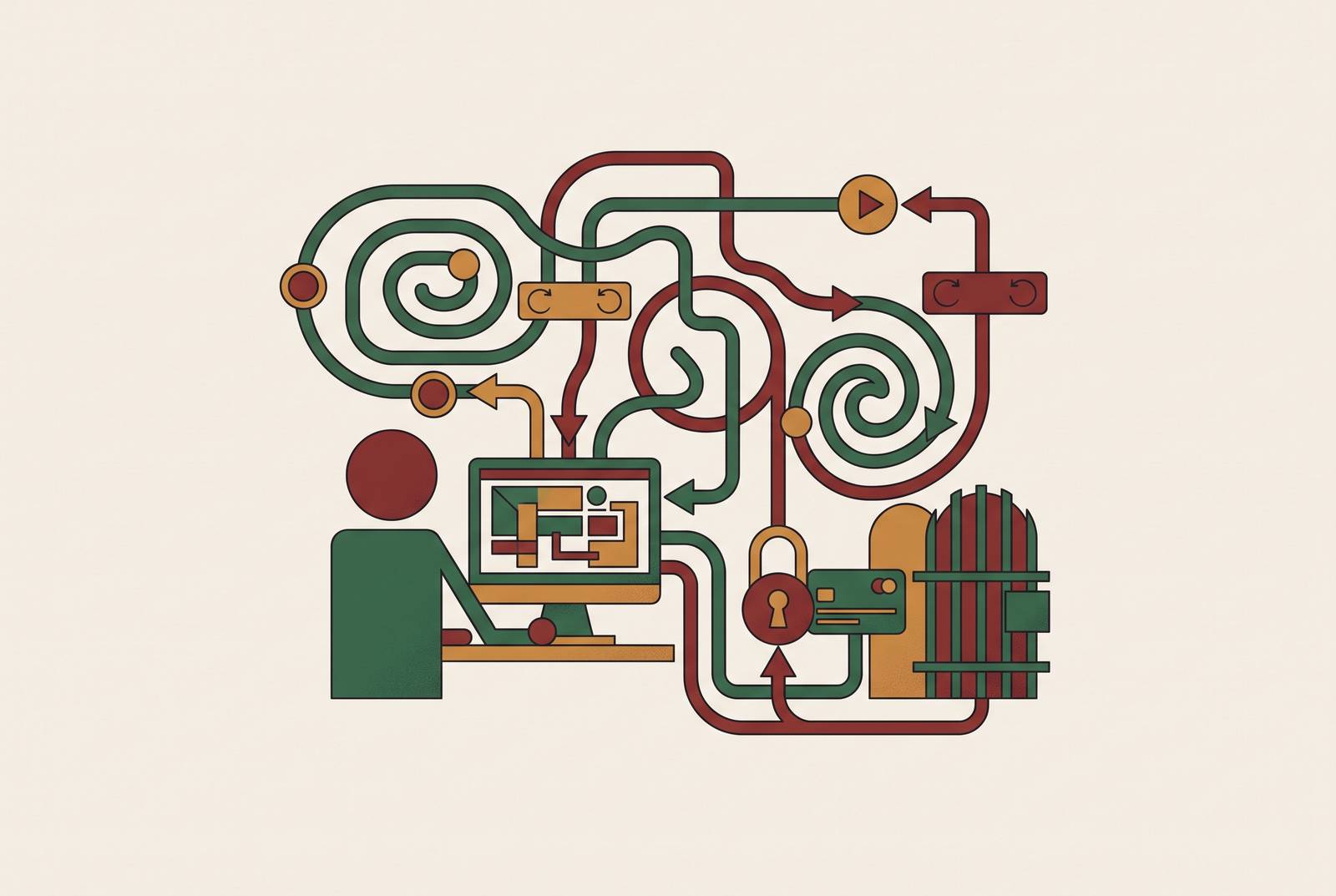
A 2024 review by ICPEN, covering 642 websites and apps across 27 authorities in 26 countries, found close to 76% used at least one dark pattern in their cancellation flow, and nearly 67% used more than one. That's not a handful of bad actors, and it's not a fringe practice either. It's standard practice across an entire industry, and the tactics repeat across companies because they work.
Phone-only cancellation walls. Sign up online in two clicks, but cancel and suddenly you need to pick up a phone. The asymmetry is the whole point.
Hidden or buried cancel buttons. There's no cancel option on the account dashboard, where a person would actually look. It's tucked into an FAQ page, or three menus deep in support docs.
Multi-step guilt flows, sometimes called confirm-shaming. A string of screens built to make someone second-guess the decision, dressed in emotionally loaded language: "Are you sure you want to lose access to your data, your progress, your discount?"
Save offers and interruptions. Mid-cancellation, a discount pops up, or a new offer resets the whole process back to step one.
Fake cancellation confirmations. The user believes the subscription is dead, but in reality, it's paused, or quietly downgraded, and billing resumes on its own schedule.
Free trials that convert without warning. Per a 2024 CNET survey, 48% of U.S. adults have forgotten to cancel a free trial before it flipped into a paid plan.
None of this happens by accident. The FTC's own case against Amazon referred internally to the company's maze of cancellation screens as the "Iliad Flow," a name that only makes sense if someone built the maze on purpose and knew exactly what they were doing. Consumers almost never spot a dark pattern while they're inside it, which is the part that makes the whole system durable. They notice only after the charge shows up on the statement, and by then the moment to push back cleanly has already passed.
The companies most cited for making cancellation difficult
Amazon Prime. The FTC alleged Amazon signed consumers up for Prime without clear disclosure, then built a cancellation maze, the "Iliad Flow," with enough screens to wear people down before they reached the exit. Amazon settled for $2.5 billion. The current path on desktop: Account & Lists, then Memberships & Subscriptions, then Manage Prime, then End Membership. The mobile app buries it even further behind menu labels that never actually say "cancel."
Adobe Creative Cloud. The DOJ, filing on the FTC's behalf in June 2024, alleged Adobe failed to clearly disclose early termination fees on its "Annual, Paid Monthly" plans and made cancellation unreasonably hard to complete. The action drew significant regulatory attention for the breadth of its allegations. The trap: people sign up believing it's a simple monthly plan, then discover on cancellation that they owe a substantial fee tied to the remaining annual contract, a term that sat in fine print the whole time.
Shutterstock. Paid $35 million in May 2026 over hidden terms, consent obtained without clear disclosure, and a cancellation process the FTC called difficult. Annual plans got sold without making auto-renewal terms visible up front.
HelloFresh. California district attorneys reached a $7.5 million settlement in August 2025. The complaint centered on retention screens standing between customers and the cancel button, with "pause" displayed far more prominently than "cancel."
Noom. Settled a private class action for $56 million over complaints about cancellation practices.
JustAnswer. The FTC sued, alleging consumers got enrolled in a recurring monthly charge without clearly agreeing to it, and that cancellation was not made easy to find after signup.
Beyond the settlements, plenty of services draw constant complaints without a lawsuit attached: gym chains, some of which impose burdensome offline cancellation requirements; satellite radio, which has long relied on phone-based cancellation; and newspapers and magazines that let you sign up on a website but make you call a center to leave.
Why phone-only and call-center cancellation walls persist
The logic here is simple, and companies aren't shy about it once you understand the incentive. A phone call lets a trained retention agent do things a webpage can't: offer a discount in real time, propose a pause instead of a cancel, make an emotional appeal tailored to whatever the customer just said. The call itself is the retention tool, and cancelling with two clicks online leaves no one there to talk you out of it, which is exactly why so few companies let you.
Then there's the clock. A twenty-minute hold is its own filter, and a meaningful share of people who call in to cancel simply give up before reaching a person, at which point the company never spends a cent on retention offers to keep that revenue.
This shows up hardest in a specific set of industries: satellite radio, gyms and fitness clubs, print and digital newspapers (major newspapers have historically required a phone call to cancel), cable and internet bundles, and some insurance and home warranty products. Sign-up takes two minutes online, while cancellation takes twenty on the phone, and that eighteen-minute gap is monetized time, not wasted time. Companies in states with no click-to-cancel law face zero pressure to close it. Even the FTC's short-lived 2024 Negative Option Rule left room for companies to continue billing before facing any consequence, given the pace of enforcement.
What federal and state law actually requires right now
Federal law is in flux right now, and the confusion favors the companies. The FTC's 2024 Negative Option Rule would have required cancellation to be as easy as sign-up, full stop. A federal appeals court vacated it in 2025 on procedural grounds, an Administrative Procedure Act violation in how the rule was written, not a ruling on the substance. The FTC relaunched the effort through an ANPRM in March 2026, and the agency reaffirmed its commitment to fighting deceptive negative-option subscriptions in early 2026.
Two things still apply regardless of where that rule ends up: ROSCA, the Restore Online Shoppers' Confidence Act, covers online sign-ups and bars certain deceptive tactics outright, and the FTC's general Section 5 authority over deceptive practices stays active too.
The stronger, more concrete protections live at the state level, not the federal one. Many states now have some version of an automatic-renewal or cancellation law on the books, and a few actually have teeth. Colorado requires online cancellation for anyone who signed up online, with penalties up to $20,000 per violation. Massachusetts requires cancellation on the same channel used for sign-up, meaning a phone-only exit for an online sign-up is no longer legal there. Minnesota requires easy online cancellation and places limits on save offers a company can present without permission. New York requires explicit consumer consent before any price increase takes effect. New York City has its own click-to-cancel rule in the pipeline as well.
Practically, a consumer in Colorado or Massachusetts denied an online cancel option has an actual legal claim, while a consumer in a state without that law doesn't, at least not yet, and that gap is the whole ballgame right now. Filing a complaint with the FTC won't trigger immediate enforcement, but complaint volume feeds into where the agency focuses its attention next.
Exact workarounds for the services that make cancellation hardest
Amazon Prime. On desktop: Account & Lists, then Memberships & Subscriptions, then Manage Prime, then End Membership. Follow every prompt through to the final confirm screen and skip "Remind Me Later," which exists solely to buy the company one more month. If enrollment happened without clear consent in the first place, file an FTC complaint and ask the card issuer for a chargeback citing unauthorized enrollment.
Adobe Creative Cloud. Cancelling early in the billing cycle may reduce or eliminate the early termination fee, so it is worth asking the agent directly. Past that window, open a chat cancellation and ask the agent directly to waive the fee; if they push back, escalate to a supervisor. Downgrading to a free tier, where one exists for the product in question, stops billing without triggering the fee at all.
Noom. Cancel through the app's settings and don't engage with the save-flow screens along the way. Answering those questions often resets the whole sequence back to the start, which is exactly what they're designed to do. Past the refund window, dispute the charge with the card issuer and point to the $56 million class action as context.
HelloFresh and similar meal-kit services. The pause button sits in front of the cancel option almost every time. Look for "Cancel Plan," usually smaller text lower on the page, and clear the cancellation before the weekly cutoff, typically a few days ahead of the next delivery. Miss it by even a few hours and one more box ships, charged in full.
Phone-wall services. For satellite radio, the online account now has a Subscription, then Cancel Subscription path, though it may route into a callback queue; chat is often faster. Expect multiple retention offers and decline each one with a flat "I just need to confirm cancellation." For gyms, check the original contract: some require certified mail specifically, which is a legal requirement, not a stalling tactic, though some states require gyms to accept in-person cancellation no matter what the contract says. For newspapers, the Times now offers online cancellation; for others, call during off-peak hours (weekday mornings work best), have the account number ready, and state the cancellation request in the very first sentence.
One habit covers all of these: the moment a cancellation confirmation email arrives, screenshot it with the timestamp visible, because that's the evidence a chargeback needs if a charge shows up anyway. A credit card dispute citing "services not authorized" is legitimate any time a charge follows a documented cancellation attempt, and most issuers side with the consumer once that confirmation is in hand.
How subscription creep continues billing even after you think you've cancelled
According to Motley Fool Money's 2024 Subscription Sanity survey, 57% of respondents believe they're overpaying for subscriptions. Solidgate's research found 25% had experienced an unexpected charge, and 33% cancelled a subscription in the past year specifically over billing frustration. Late in 2025, price hikes of just $1 to $3 per service quietly pushed many households $15 to $30 higher per month, per Consumer Affairs. Because nothing about the service itself changes when the price does, that kind of increase tends to go unnoticed until the total has climbed a long way from where it started.
Billing survives a cancellation attempt in three specific ways, and it's worth naming all three because each one requires a different fix. Sometimes the consumer clicked "pause" during a save-flow screen while believing they'd clicked cancel. Other times cancellation is confirmed but doesn't take effect until the end of the current billing cycle, so one more charge lands and the person assumes the cancellation failed. And sometimes a service treats a login during a paused period as consent to re-enroll, restarting billing without ever asking again.
Price creep compounds all of it. Even a subscription that got successfully cancelled, or successfully kept alive through a retention offer, tends to see its price inch upward over time, and a $1 to $3 increase sits below the threshold most people notice enough to act on. SWNS research found 79% of people say they're frustrated by hidden fees, but frustration alone doesn't flag a charge. Unless someone checks every line of every bank statement every month, none of this is visible, and that's not how most people live.
Why ongoing monitoring catches what one-time audits miss
Self Financial found 54.9% of respondents have at least one paid subscription they don't use, averaging around 0.8 unused subscriptions per person. That number isn't fixed, moving constantly as new trials convert, prices creep, and "cancelled" subscriptions quietly reactivate.
A one-time audit of a bank statement catches what's wrong today, and only today. It can't catch the free trial that converts three weeks from now, the price that ticks up next quarter, or the subscription marked cancelled that reactivates the next time someone logs in to check on it. That's the real failure of the audit-once approach: it treats billing as a fixed problem to solve, when it's actually a moving target that keeps shifting under whatever snapshot you just took.