Why Forgotten Subscriptions Keep Slipping Through and How to Cut Them Off for Good
Subscription billing is designed to hide charges, but systematic audits and monitoring catch them.
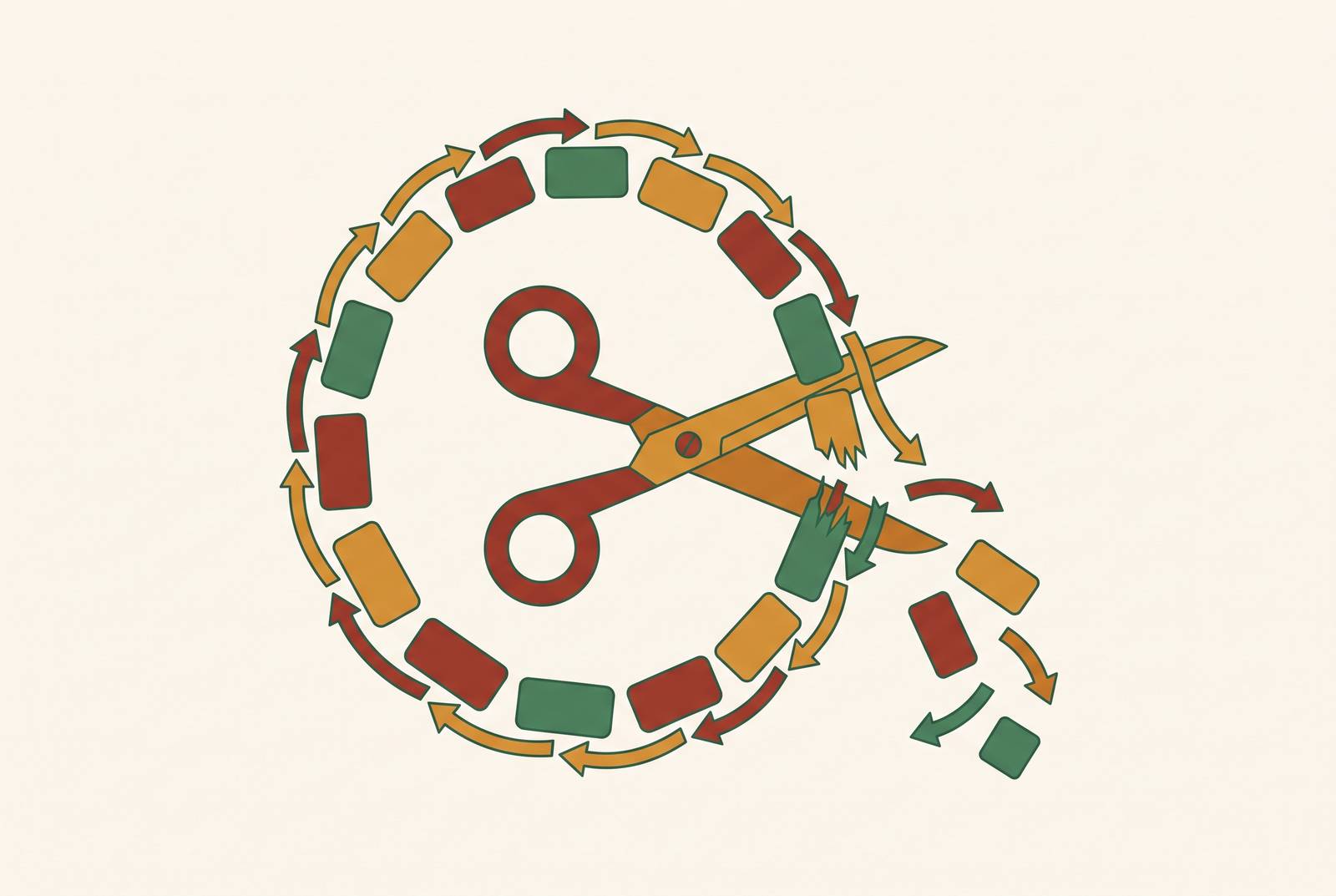
To check and cancel subscriptions, review app store renewals, bank and credit card statements, email receipts, and saved logins, then cancel unused or duplicate services and keep confirmation. Forgotten charges are not a willpower problem but the result of billing designed to run without attention. A one-time audit finds existing waste, while continuous monitoring catches the next trial conversion, renewal, or price increase.
How subscription billing is engineered to stay below the threshold of conscious attention
Subscription billing separates payment from the decision to keep buying. Small recurring charges feel too small to question. Auto-pay removes the pause that would otherwise prompt reconsideration. Staggered billing dates across different payment methods then scatter the evidence, so no single statement reveals the whole picture.
Convenience is a real preference, and people voluntarily choose auto-pay and discounted annual plans. But choosing easier payment is not choosing to forget what is being bought. The billing system keeps a complete schedule while the customer has to reconstruct it from scattered records. Tools like Compass, an AI-powered money-saving agent that monitors bank and email accounts for unused subscriptions and price changes, address that imbalance through background monitoring that replaces repeated acts of attention.
The scale of what the architecture produces — unused subscriptions and the perception gap
Self Financial's 2026 survey found that the average respondent has 3.4 active paid subscriptions, but most people do not mentally account for all of them. A majority admit that at least one paid subscription is going unused. These are not simply people choosing a large entertainment budget. They are paying for services that have dropped out of use without dropping out of billing.
In Self Financial's 2026 survey, people named Starz most often as a streaming subscription they paid for but did not use, followed by Disney+ and Netflix. Among food delivery services, DoorDash came first, followed by Grubhub and Caviar. Smaller subscriptions for extra storage or ad removal widen the gap because each charge seems too small to look into. Together, these separate expenses create an invisible budget line. Compass finds unused subscriptions by looking at billing patterns across accounts and shows the dollar amount and what to do next for each one, making that hidden spending easier to judge.
Why free trials are the primary entry point for forgotten charges
A free trial that automatically converts is a paid subscription with a delayed start. Self Financial's 2026 survey found that 70% of respondents had forgotten to cancel a free trial at least once. Roughly half said it had happened twice. For more than a third of those affected, the unexpected charge meant cutting back on other spending.
The trap starts when a 7-day trial requires a card at sign-up. The user intends to cancel, but the deadline passes and a monthly charge arrives under a vague company name. Reading the fine print reveals the terms, but it does not keep the deadline in view. Catching the transition calls for a background watchdog, including Compass, that flags trial-to-paid changes before the next statement review.
Annual plans carry the same problem across a full year, so a monthly checklist can miss the renewal. When people in a household share payment methods, a subscription can also get missed if no one has the clear job of keeping track of it. Neither case is solved by knowing, in general, that automatic renewal exists.
The Unsubscribe Act, reintroduced January 13, 2026, by Representatives Takano, Amodei, and Magaziner, would require affirmative consent before charging after a trial and cancellation in the same manner as sign-up. At introduction, it had not reached a floor vote. Separately, the Eighth Circuit Court of Appeals vacated the FTC's click-to-cancel rule on July 8, 2025, on procedural grounds. With those protections unresolved, individual countermeasures remain necessary.
How do you find all your subscriptions — the seven categories a manual audit must cover
A statement review is useful because it shows actual charges. But a complete audit needs four lookup methods, namely app store lists, three months of bank and credit card statements, email searches, and saved logins. Search email for “subscription,” “renewal,” “receipt,” “billing,” and “free trial.” Check saved browser logins or a password manager for accounts to look into, keeping in mind that a login alone does not prove there is a paid plan.
Streaming is one category to review, including services such as Starz, Disney+, and Netflix that appear in the unused-subscription findings. Fitness memberships and workout apps are another, including gym plans, Peloton app memberships, ClassPass, and yoga apps. Check fitness services not used in 90+ days.
Software is the third category, including productivity apps, VPNs, photo editors, cloud storage, and password managers. Look at software installed well over two months ago that is outside the regular workflow. Adobe Creative Cloud, Dropbox, and Microsoft 365 individual plans are worth checking, especially when the name on the bill is hard to place.
Premium delivery memberships form the fourth category, with DashPass, Instacart+, and Shipt potentially overlapping with Amazon Prime. Review memberships unused for two months or more, or services that largely duplicate each other. News, media, and newsletters are the fifth category, where a lower price at sign-up can turn into a full-price subscription. Check anything read less than once a week, including subscriptions to publications and to individual writers on Substack.
Subscription boxes are the sixth category, including FabFitFun, Ipsy, Birchbox, HelloFresh, and Blue Apron. Review any box that was not genuinely anticipated in the last two shipments. App store renewals are the seventh and need a separate check because statements may show only “Apple” or “Google.” Open iOS Settings → Subscriptions or Google Play → Payments & subscriptions to see which services the charges are for.
Once every charge is visible, group subscriptions by the job they do, such as file storage, streaming, communication, or project management. Two entries doing the same job are candidates for consolidation. Removing a redundant service can recover money without losing much capability.
What to do when cancellation is made deliberately difficult
Cancellation friction extends the billing problem into the exit. Extra steps and things that take time make leaving harder than joining. A hard cancellation may still be lawful, but people have rights beyond the steps a service tells them to take. The practical task is to make the request explicit and preserve evidence of it.
Washington D.C., Hawaii, and North Dakota require clear renewal disclosures and straightforward cancellation paths, with Connecticut doing so as of July 1, 2026. California requires online cancellation when sign-up was online. Those rights can differ from place to place.
First, cancel in writing through the same channel used to sign up and keep a dated copy and any confirmation number. If the service resists, revoke payment authorization directly with the bank or card issuer. If charges continue, file a complaint with the FTC and the state attorney general.
A retention discount does not change whether the service is needed, so decline it if cancellation remains the right decision. A fee may be mentioned somewhere and still not be clearly disclosed. The FTC's enforcement action against Adobe targeted the clarity of early termination fee disclosures during sign-up.
Why a one-time audit fails and what permanent monitoring actually requires
A manual audit is good at finding charges that have already posted. It establishes a baseline and makes duplicate services visible. Its ceiling is timing, because it cannot keep watch after the review ends. A free trial ending tomorrow, a higher price next cycle, or an expiring discount needs attention outside that snapshot.
A charge that appears once a year may fall outside a three-month search. Disney+ shows why the length of the plan matters as much as its cost per month. Its annual option offers savings only if the subscriber will use it all year, and cancellation partway through a term leaves access in place until the end without a refund.
Calendar reminders help with renewals that have been recorded. They cannot cover a subscription that never entered the calendar. Price changes also make an old reminder incomplete, because remembering a renewal is not the same as knowing what it will cost.
Permanent monitoring therefore needs continuous coverage across charge sources, including bank accounts, credit cards, app stores, and email receipts. It also needs alerts early enough to act before payment. A dashboard waits for the user to look. An agent brings a finding and a next action to the user.
How AI-powered monitoring tools work and what to look for when choosing one
Compass+ is an option for people who suspect money is leaking but do not want to repeat a manual audit. It connects to bank accounts, email, calendar, Amazon, and subscription services in read-only mode. Its monitoring covers unused subscriptions, upcoming trial conversions, rising bills, duplicate charges, promised refunds that have not arrived, price drops after purchase, and late delivery credits. Each finding comes with a specific dollar amount and a clear next action. It is designed to continue after setup without ongoing user effort and cannot move money.
However, connected coverage is the deciding factor. A tool cannot see charges through a channel it does not cover. Ask whether its account connections match the places where subscriptions actually bill, including cards, email, app stores, and direct subscription services.
ReSubs offers a different trade-off on iOS and Android. It uses data entered by hand and from app stores, tracks costs in different currencies, sends reminders when plans renew, and shows how much is spent each month, all without connecting to a bank. It suits users who prefer that boundary, but it does not monitor email or automatically catch charges outside app stores. Ditch scans an inbox for subscription receipts without requiring a bank login. It is useful for a starting audit, but it does not provide continuous monitoring or proactive alerts.
For any tool, judge the output as closely as the coverage. A useful finding gives the dollar amount and what to do next, going beyond a broad view of spending. For upcoming charges, check whether it can warn before payment, including trial expirations and price changes. Read-only access matters too, but it is separate from how the connection is made.
The CFPB's Section 1033 open banking rule is blocked by a federal court injunction as of July 2026 and is being rewritten. New York's Assembly Bill 10640 and Senate Bill 9483, introduced March 2026, would require developer interfaces that let people give permission for their data to be accessed. With standards unresolved, consumers need to ask about each tool's access method because connections can work differently.
Recurly's 2026 State of Subscriptions report found that 43% of consumers are comfortable with AI managing subscriptions, specifically for fraud prevention and content personalization. Trust should rest on explicit consent, read-only permissions, and revocable token-based connections that avoid shared passwords.
How to set up a monitoring system that works permanently, starting today
Start with the one-time audit to establish a baseline. Use the four lookup methods to build a complete view before deciding what to cut. Pay particular attention to small recurring charges, because their size makes them easy to dismiss. Then give every subscription a deliberate keep-or-cancel decision.
Keep services used in the past 30 days and cancel unused ones, with an exception for infrequent but valued services such as annual tax software or cloud backup. For those exceptions, write down the renewal date and set a reminder to decide whether to keep them. Consolidate two subscriptions serving the same job. For future free trials, set a calendar reminder two days before the end and consider a virtual or single-use card number.
Next, choose monitoring that matches the access and coverage required. Compass+ keeps watching accounts, while ReSubs helps track plans with reminders without connecting to financial accounts and Ditch checks an inbox for a starting audit. The narrower options can be useful, but they do not replace coverage of channels they cannot watch.
Before connecting a tool, ask whether it uses OAuth-based API access or credential-based screen scraping. Prefer read-only, revocable token-based access that does not expose the bank password. The aim is not another audit to keep on a to-do list. Billing never stops running, so the lasting answer is a system that watches what memory can't.